
Why Games Teach Technique Better Than Drills
For a long time, I thought drilling was king.
I believed in building muscle memory. Show the technique. Break it down. Say the same cues over and over. If you do that enough, the body will know what to do when it matters.
There’s truth in that, especially with kids.
When wrestlers go to tournaments, they hear familiar words from the corner. Those words come from practice. Repetition helps. Teaching a small number of moves and letting kids feel proficient at them absolutely made me a better youth coach. The idea of over-drilling and under-coaching has real value.
But over time, something didn’t add up.
The Contradiction I Couldn’t Ignore
Even back then, I always said I wanted kids to be problem solvers.
I didn’t want robots. I didn’t want kids who froze the moment something didn’t look exactly like the drill.
But teaching technique as the perfect solution quietly assumes that a perfect solution exists.
It doesn’t.
There are a thousand ways to score a takedown. What works depends on body type, timing, strength, flexibility, and the opponent standing across from you. When I taught one “correct” answer to everyone, I wasn’t building problem solvers. I was building kids who waited to be told what to do.
That gap showed up most clearly in matches. Kids could perform drills cleanly, but hesitated when the position looked slightly different under pressure.
How Games Changed the Frame
Games forced me to change the question.
Instead of asking, “How do I explain this technique better?” I started asking, “What is the actual problem the wrestler is trying to solve?”
There is no perfect technique. There is only a task.
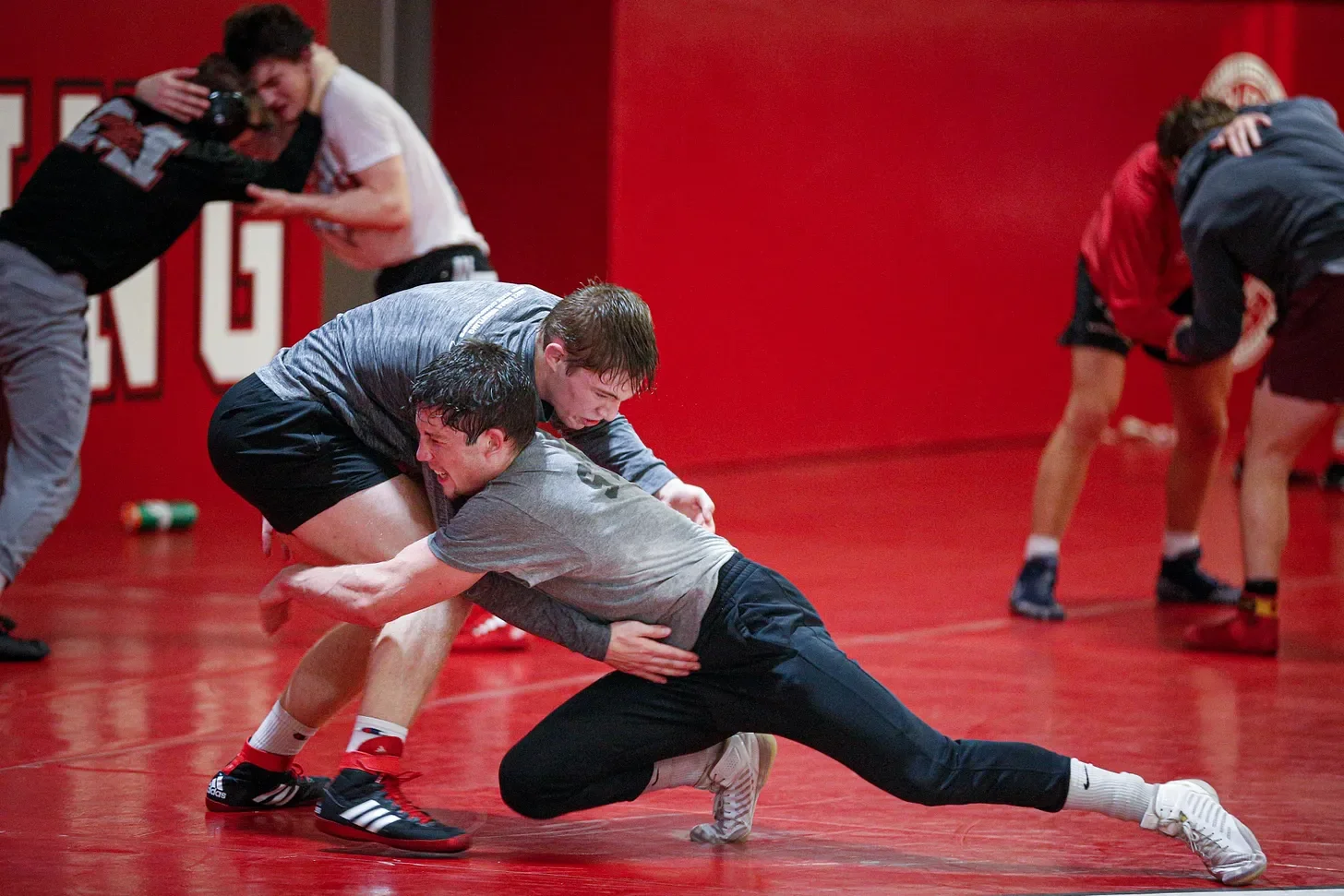
If you’re in a standing single leg, the task is simple: get your opponent to their hip.
How you do that doesn’t matter, as long as it works against resistance. You might trip. You might block with your forearm. You might dump them to their butt. Each solution is better or worse depending on the wrestler.
This doesn’t mean anything goes. Games aren’t free-for-alls. They’re tightly constrained, short, and built around very specific problems. The rules and win conditions limit what’s possible, which is exactly how bad habits are prevented.
That led to a simple shift in how I think about practice:
Instead of telling kids what to do, I design games so the right behavior is the easiest way to win.
What Games Actually Do
Games Create Problem Solvers (Not Chaos)
Games expose kids to problems and let them search for workable solutions, but only inside clear boundaries.
This is called the Constraint-Led Approach (CLA), and it's been studied extensively in sports coaching. The idea is simple: you don't teach by explaining everything upfront. You design constraints (rules, boundaries, win conditions) that guide athletes toward discovering solutions themselves.
They are intentionally non-linear and messy, because learning is messy, awkward, and uncomfortable. You don’t automatically produce clean technique. You learn by feeling variables: defensive reactions, balance changes, timing, pressure. Those variables almost never show up in drilling unless the partner is highly skilled and highly compliant.
Games create early exposure to those variables. Kids learn what the problem feels like before being asked to clean it up.
This is why I use games every single practice, right after warmups. They’re not a reward or a break. They’re the bridge between movement and technique.
Games Reduce the Things Coaches Hate Policing
Games avoid three problems that burn coaches out in big rooms:
Instruction overload - Kids struggle to remember the 10 steps you explained in your demo. Games reduce talking and increase doing.
Effort management - Kids compete hard when there’s something to win. Drills require reminders. Games don’t.
Constant correction - Instead of yelling the instructions over and over when kids don’t do them, you change the rules and let the environment do the teaching.
This doesn’t lower standards. It enforces them without constant verbal control.
Why This Works (A Real-World Analogy)
If you want people to stop speeding on a wide, open road, you have two options:
Put up speed limit signs and issue tickets
Narrow the road, add a median, and make it feel unsafe to drive fast
The second option works better. This has been studied extensively.
Tickets are reactive. They feel productive, but behavior doesn’t change for long. Environmental design changes behavior automatically.
Coaching works the same way.
Yelling at kids to fix behavior is harder and less effective than creating an environment that naturally produces the behavior you want.
A Wrestling Example
We constantly tell kids to keep their head and chest up on shots.
They don’t.
So instead of yelling louder, you change the environment.
Start in a standing single leg
Offense wins by getting to treetop or putting the opponent on their butt
Defense wins by getting chest on back, clearing the leg, or forcing the opponent to their knees
Now head position matters immediately.
If their opponent gets chest on their back, they lose. So they keep their head up, without being told.
This doesn’t create bad habits because the constraints eliminate bad options. The game narrows the solution space before technique ever enters the picture.
Where Technique Fits (And Why It Lands Better)
Technique still matters. Wrestling as a whole has discovered solutions that work, and ignoring that would be a mistake.
Games don’t replace drilling. They determine when drilling actually makes sense.
The sequence looks like this:
Frame the problem - Briefly explain what they’re trying to solve and why it matters.
Play the game - Maximize the reps for maximum exposure to the problem.
Reflect briefly - What was hard? What worked? What didn’t?
Teach the technique - Now the “perfect” technique is clearly a solution to a problem they just felt.
Recreate the position at lower intensity - Because the game gave both offense and defense clear tasks, you can ask partners to recreate those roles in controlled sparring, something that’s otherwise very hard to teach young kids.
Kids still adapt the technique to fit themselves. That’s a feature, not a bug. At least now they’re adapting something that actually works.
Why I’m Sticking With This
The biggest change I’ve seen is in matches. It’s happened quickly.
Kids recognize positions faster. They hesitate less. Now, in match, I can yell the win condition from a game and it helps them recognize where they are. They lock in and complete the task they’ve played in games during practice.
On the practice side, I talk less, yell less, and coach effort far less directly, because effort is built into the games.
Kids move more. They compete harder. They learn faster.
What’s Next
In future posts, I’ll share specific game examples, break down why they worked, show how to design games from scratch, help debug games that aren’t producing the behavior you want, and outline simple reflection questions that actually improve learning.
Technique still matters.
Games are how kids learn why it matters, and how to use it when it counts.