
How to Coach 50+ Kids at Once (and not suck at it)
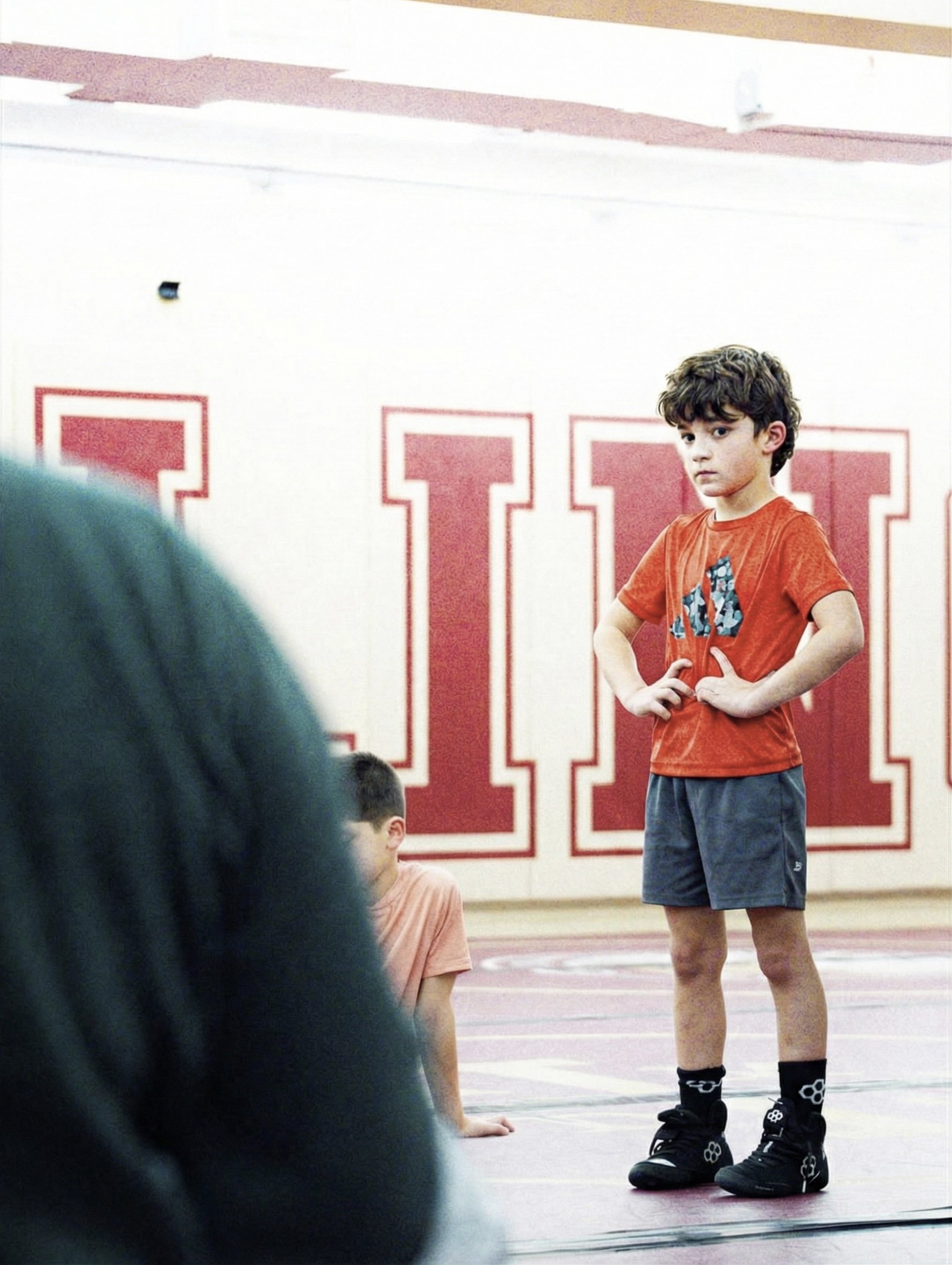
Since November, I’ve been coaching practices with 50+ beginner kids at a time. We’re talking 2nd graders mixed with 8th graders, all in the same room.
If you’ve ever been in that situation, you know the tension. You want high standards. You want kids learning real wrestling. And you don’t want to spend 90 minutes yelling reminders just to keep the room from devolving into chaos.
Here’s what’s helped me keep my head on straight, and the room functioning, without lowering expectations.
Structure and Standards Come First
Structure doesn’t mean micromanaging every moment. It means clarity.
Kids want to know what matters, what doesn’t, and where the lines are. That starts with laying out expectations clearly, early, and often. Not a long speech. Not a rulebook. Just a few standards that actually matter, and never relenting on them.
You don’t need 1,000 rules. You need a small number of non-negotiables.
Examples from our room:
Run, not walk, to and from instructions.
No laying down or laying back on your hands during instruction
Run around coaches during warmups, no cutting them off
Sit on the circle during instruction, not in front or behind it
These standards aren’t arbitrary. They exist to keep the room safe, efficient, and focused. The key is consistency and repetition. Kids don’t need a deep explanation every day, but they do need to understand why the standards exist. Before practice, I’ll often frame them inside a simple story about who we are and how we operate.
Clear standards reduce friction. Less friction means more wrestling.
Warmups Set the Tone
Warmups aren’t just physical. They’re cultural.
If warmups are sloppy and distracted, practice usually follows. If warmups are organized, competitive, and purposeful, the room locks in early. This is where effort expectations get set without saying a word.
Simple Systems That Keep Standards in Place
A few operational systems go a long way:
Countdowns, counting “5, 4, 3, 2, 1” to get kids moving in and out
Use a whistle, a loud one. Kids hear them faster and respond to it more than your voice
Consistent practice structure, when practice follows the same general rhythm every day, kids stop asking “what’s next?” and start moving automatically
Predictability creates speed. Speed keeps standards intact without constant reminders.
Use Your Coaches (Even If They’re Volunteers)
If your assistant coaches aren’t meaningfully helpful, you’re already behind.
Bring your coaches together and be direct. But here’s the key: instead of every coach floating around trying to help everyone, assign responsibility. Each coach owns 5-6 groups and is responsible for effort and engagement in that slice of the room.
This means:
Tell them you need help
Be assertive about standards
Expect everyone to be vocal
Every coach doesn’t need to coach every athlete. Every coach needs to make their group the hardest workers in the room.
Wrestle More. Talk Less.
One of the biggest shifts we’ve made is prioritizing hard live wrestling.
More live:
Tires kids out
Keeps them engaged
Is where they actually learn
Teaches them to move their bodies hard
It’s similar to coaching baseball. You can explain a swing a hundred times, but most kids learn faster when you toss them the ball, let them try, and then make small adjustments based on what just happened.
We’ve started adjusting drilling to incorporate more life like this:
First whistle, drill the double-leg shot
Second whistle, go live in the double-leg finish
This works especially well when it follows a previous practice focused on that position. Kids recognize the situation and immediately know what they’re trying to accomplish.
Don’t Overteach
Kids aren’t great abstract thinkers. You think they’ll remember ten step moves? Absolutely not.
Instead, teach the same move multiple times, but only emphasize one or two cues per practice.
For example, with double legs:
One day focus on finishes (”throw your head and run”)
Another day on shots (”get to your feet, head up back straight”)
Another day on setups (”hands and head are shields- get past them”)
Over time, they build the whole picture without being overloaded in one session.
Limit Your Technical Scope
We’ve intentionally limited what we teach.
Not because technique isn’t important, but because too much technique kills clarity.
Our core list has been:
Double legs (run-your-feet finish)
Snap downs
Single legs (treetop finish)
Far knee-far ankle breakdown
Half nelson
Quadpod stand-up
Sprawling
Go-behinds
That’s it. If you pick the right techniques, they naturally work together. Running your feet on a double leg looks a lot like running your feet on a far knee–far ankle breakdown or finishing a half. The movements reinforce each other instead of competing for attention.
Kids don’t need everything. They need a few things they can actually use.
Use Games to Teach Wrestling
We’ve leaned heavily into games, which is part of the Constraint-Led Approach (CLA).
The idea is simple: instead of explaining everything up front, you design a game where the only way to win is by doing the right thing.
This matters in large rooms. With 50 kids, one technique will always be too easy for some, too hard for others, or inappropriate for certain body types. Games focus on invariant problems, problems that exist at every level, size, and preference, so learning scales naturally.
EXAMPLE: During go-behind work, we played a game where the main objective was dealing with getting past the blocking arm and putting your opponent on their hip. No long explanation. Just a clear win condition.
Kids immediately started solving the problem in their own ways, dragging, passing, jumping, using their chest. When we showed a formal technique afterward, it landed better because they already understood why it mattered.
A huge benefit is that coaches get less frustrated. Instead of constantly re-explaining steps, and coaching effort, we adjust the game and watch how kids respond. The room stays active, and learning keeps moving forward.
Effort First. Technique Second.
At this age, effort and movement matter most.
If kids are pushing, pulling, scrambling, and reacting, you have something to work with. Technique refines that later. If kids are standing around listening, nothing sticks.
The Big Picture
Coaching big groups of kids doesn’t require lowering standards.
It requires:
Choosing the right standards
Using simple systems to enforce them
Creating practices where kids move, compete, and solve problems
When kids wrestle more, learn through games, and understand why techniques matter, everyone benefits, including the coaches.
And you don’t leave practice completely fried.